

The Challenge
Digital gender-based violence is a growing risk for Indonesian women and girls, yet awareness rarely translates into behavioral change. Existing frameworks such as the TPKS Law face implementation gaps.EUICF helped forming an enabling environment that could align diverse stakeholders, navigate a sensitive issue, and deliver measurable public engagement to raise higher awareness and support the reinforcement of the Law without triggering controversy.
Our Approach
- Developed three-pillar content architecture: awareness, participation, and human interest
- Coordinated EU Delegation to Indonesia, government offices, UN agencies, CSOs, and youth communities
- Deployed KOLs as peer educators alongside institutional voices
- Partnered with 48 local community-based and gender advocacy networks
- Mobilized Youth Sounding Board: Sahabat Uni Eropa
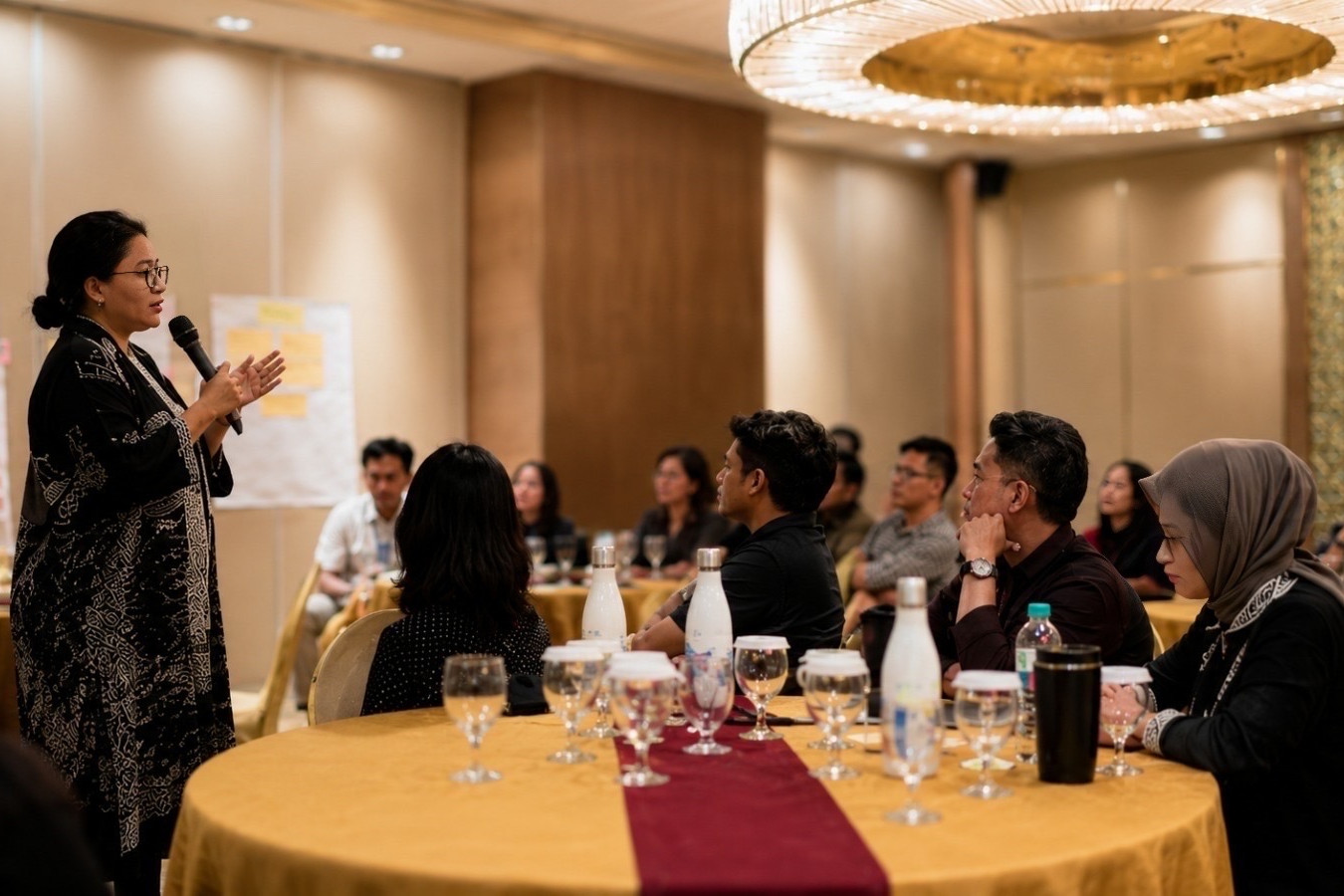
- Hosted a Youth Policy Dialogue at a leading national university
- Executed a 300+ Bike Ride participants as a public advocacy movement
- Integrated PESO media within a digital-first framework
The Result
- The campaign recorded 3,825,068 impressions; 1,722,829 reach; 117,493 engagements across digital platforms
- Published 67 content pieces with no negative public sentiment recorded
- Improved youth understanding of digital risks including doxxing and cyberstalking
- Multi-stakeholder policy dialogue convened government, EU partners, CSOs, and youth
- Sustained partner engagement beyond campaign timeline confirmed stakeholder trust